
Famous Bisbee Celebrities
Updated: May 26
Where Legends Walked
Bisbee, Arizona—once a bustling mining hub, now a quirky haven—has quietly attracted icons from every corner of fame. From war chiefs and presidents to Hollywood rebels and world-class artists, Bisbee's winding streets have witnessed legends in boots, brushes, and blazers.
Whether they stayed a weekend or a lifetime, these celebrities shaped and were shaped by the magic of Bisbee. And today, you can follow in their footsteps—with the help of Big Jeep Tours.
Famous Bisbee Celebrities of the Old West
Geronimo: Apache Warrior
Before tourists flocked to Bisbee for ghost stories and mine tours, the land was a war zone. Geronimo, the revered medicine man for the Chiricahua Apache, shaped the very reason Bisbee exists today.
In the 1850s, Mexican soldiers raided Geronimo’s camp, killing his mother, wife, and three children—an atrocity that sent him on a warpath that spanned decades. Fueled by grief and spiritual vision, he led relentless raids across southern Arizona and northern Mexico, making him both feared and respected by settlers, soldiers, and tribes alike.
Geronimo defended the Chiricahua Mountains, a rugged stronghold just west of modern-day Bisbee. The land was so dangerous that anyone traveling near it risked death. His guerrilla tactics, deep terrain knowledge, and fearless ambushes kept the region in chaos—and it’s because of this resistance that the U.S. Army sent cavalry forces into the Mule Mountains, inadvertently discovering mineral-rich hills that would become Bisbee.
For nine years, Bisbee’s earliest settlers endured near-constant raids led or inspired by Geronimo. Camps were attacked, supply routes disrupted, and miners forced to arm themselves daily. The violence only ended when Geronimo surrendered in 1886, marking the close of the Apache Wars—and the beginning of Bisbee’s rise as a copper empire.
Without Geronimo’s fight, there might never have been a Bisbee,” says Travis Bishop of Big Jeep Tours. “His resistance forced history to find this canyon.
Want to see the canyons Geronimo once ruled?
Dr. James Douglas: The Father of Bisbee
Dr. James Walter Douglas (1837–1918), a Canadian-born mining engineer and metallurgist, is widely celebrated as the “Father of Bisbee.” He was instrumental in transforming a remote mining camp into a copper empire.
Douglas joined Phelps Dodge in the early 1880s as a specialist in metallurgical processes and resource assessment. In 1885, he successfully negotiated the acquisition of the Atlanta and Copper Queen mines, leading to the formation of the Copper Queen Consolidated Mining Company, a key subsidiary of Phelps Dodge.
As President and General Manager of Copper Queen Consolidated, Douglas headquartered the company in Bisbee. He later became President—and eventually Chairman—of the restructured Phelps Dodge Corporation in 1908 when the subsidiary merged into the larger corporate entity .
Douglas pioneered research-backed methods in copper smelting and refining, revolutionizing productivity at Bisbee, Morenci, Globe, and beyond. The Bisbee Mining & Historical Museum, formerly the Copper Queen offices built in 1896, became a cornerstone of the town's industrial heritage.
Douglas orchestrated the creation of the Arizona and South Eastern Railroad (later the El Paso and Southwestern Railroad), linking mines, smelters, and markets, with Bisbee as a key hub.
The son of a renowned Scottish surgeon, Douglas inherited a strong sense of civic duty. He invested mining profits in educational institutions, libraries, and hospitals across Arizona and New York.
Explore the original Copper Queen office building (now Bisbee Mining Museum), follow old railroad routes, and learn more about Douglas’s innovations on the Copper Territory Tour.
John C. Greenway
George Warren
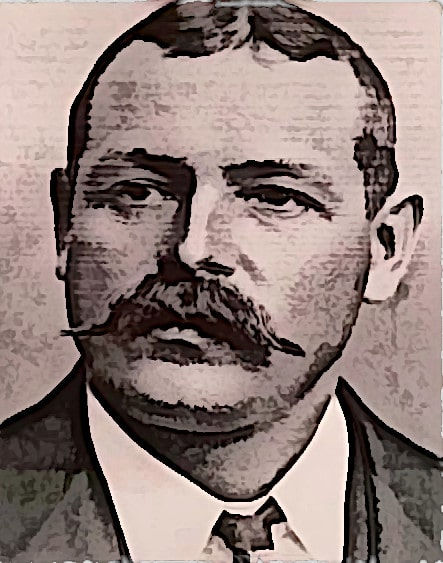
Joseph Muheim: Swiss Immigrant and Developer
Joseph Muheim was a Swiss immigrant who arrived in Bisbee in 1887. He came to work in his uncle’s wooden brewery saloon, located at the base of what is now known as Brewery Gulch. After inheriting the business, Muheim made the decision to replace the original structure with a more permanent and substantial building.
In 1905, he constructed the Muheim Block, a large brick building that became a central hub for Bisbee’s commercial activity. Located at the mouth of Brewery Gulch, the Muheim Block provided space for a brewery, saloon, hotel accommodations, a café and restaurant, and multiple business offices. It served as both a gathering place and a center of commerce for the growing mining town.
During Prohibition, Muheim adapted the saloon for financial purposes. He moved an E.F. Hutton stock ticker from the second floor into the bar and installed a large stock exchange board on the north wall, where visitors could track copper and mining shares. This board is still visible today, preserved behind glass as a historical feature.
Muheim also played a major role in shaping the architectural look of Bisbee. He partnered with Baptiste Caretto, an Italian stonemason and builder. Together, they designed and constructed many of the Italianate-style buildings still seen throughout Old Bisbee, known for their arched windows, brick façades, and decorative details.
Today, the Muheim Block stands as one of the most important historic buildings in Bisbee, representing both its mining heritage and architectural legacy.
👉 The Bisbee Downtown Tour, Old Bisbee Tour, Miners Peak Tour, Smelters Ballpak Tour, Diggers Borderwall Tour, 12 City Tour, and Copper Territory Tour all visit the Muheim Block and many of Muheim's buildings throughout Old Bisbee. »
William H. Brophy
Actors, Entertainers, and Artists Meet the High Desert
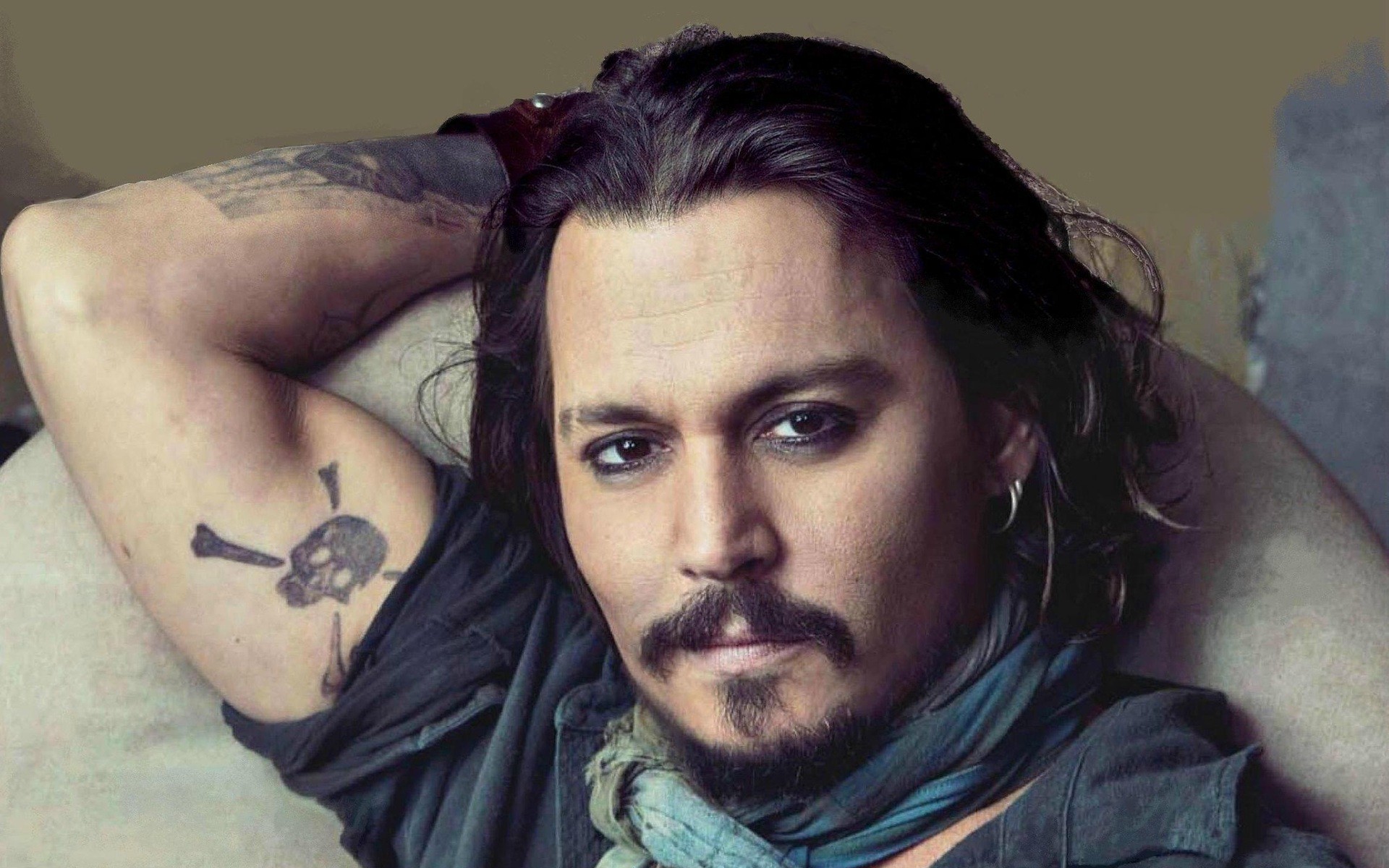
Johnny Depp: "Mr. Stench"
Johnny Depp, known for his eclectic tastes and genuine curiosity, isn’t just a film star—he’s part of Bisbee’s close-knit community. His visits are far from touristy—they’re personal getaways to connect with his best friend and fellow local icon, Doug Stanhope. Depp is often spotted winding his way through Brewery Gulch, patronizing its cozy bars and sipping quietly at intimate tables.
Locals around Stanhope’s home say Depp greets them by their first names, blending in more like a neighbor than a celebrity—proof that Bisbee’s charm is real and infectious.
One favorite anecdote: after Stanhope recorded his Bisbee-set special No Place Like Home, executive-produced by Depp, the two celebrated at a local watering hole. Depp’s warmth shone through—tipping generously, cracking jokes, and listening to open-mic artists—leading folks to remark, “He’s just one of us.”
Why it matters: When you drive through Brewery Gulch on our Bisbee Tours, you might just catch a glimpse of a Hollywood icon.
John Wayne: "The Duke"
In the 1970s, John Wayne—Hollywood legend and the quintessential Western hero—made Bisbee one of his getaway destinations. He often stayed at the historic Copper Queen Hotel, including in the aptly named John Wayne Room (#211), located upstairs by the bar for easy access.
The room remains the most requested to this day, a testament to The Duke’s lasting status.
But Wayne didn’t just sip whiskey quietly. He’s famously connected with Lee Marvin, another silver-screen icon, and the two got into a dramatic barroom brawl in the Copper Queen Saloon. The fight ended with Wayne shoving Marvin through a window near the hotel entrance. This legendary moment has become part of Bisbee lore.
Wayne wasn’t above flying under the radar—especially after a night of revelry. Locals recount that The Duke, craving solitude, would avoid curious fans by spending the night locked up in the OK Street Jail, located just behind the Copper Queen. He'd wake up refreshed and slip away before most people had their first coffee.
But Wayne’s affection for Bisbee went deeper. He aligned himself with local developers interested in revitalizing the town after the mines closed, helping preserve the spirit of an iconic West.
“The Duke was as tough in real life as he was in the movies,” says Travis Bishop of Big Jeep Tours.
So when you walk into the Copper Queen Saloon or climb the stairs to Room 211, you’re stepping into the same spaces where John Wayne drank, fought, and slept. He’s as much a part of Bisbee’s story as the town’s miners and artists.
👉 Visit the Copper Queen Hotel on most of our Bisbee Tours.»
Lee Marvin: "The Iceman"
Before Lee Marvin became an Oscar-winning actor, he was already known as one of Hollywood’s toughest men—and Bisbee was his kind of town. Gritty, rugged, and unpredictable.
Marvin starred in the 1955 crime drama Violent Saturday, which was filmed almost entirely on location in Bisbee. The movie, now considered a cult classic, tells the story of a small Arizona mining town overtaken by a trio of bank robbers—one of whom was played by Marvin himself. His role as the volatile, hammer-wielding thug brought an edge to the story, but it was Bisbee’s real streets, buildings, and mines that stole the spotlight.
“That movie is a love letter to Bisbee in the ‘50s,” says Travis Bishop of Big Jeep Tours. “You can still recognize the filming locations all over town.”
But Marvin’s ties to Bisbee didn’t end when the director yelled “Cut.” He became a regular at the Copper Queen Saloon, drinking elbow-to-elbow with John Wayne. The two stars were famously friendly, but their friendship often ended in bar fights. One notorious tale claims that Marvin got so rowdy that Wayne tossed him through a hotel window near the front entrance of the Copper Queen Hotel. Locals swear you can still find the patched-up wood near the original break site.
“When Lee Marvin came to town, it was either a party or a scene from a Western—or both,” Travis jokes.
Whether you’re a film buff or a fan of wild Hollywood legends, Bisbee is one of the few places where Marvin’s legacy still lives and breathes. And yes, you can still see the bank from Violent Saturday.
Harry Houdini: "Ehrie"
Yes, even Harry Houdini—the most legendary escape artist in history—passed through Bisbee, Arizona. In the early 1900s, during the height of his fame, Houdini stayed at the Copper Queen Hotel while touring mining towns and frontier communities across the West. Bisbee, with its boomtown energy and packed venues, was a perfect stop.
Houdini performed not once, but twice on major Bisbee stages. One appearance took place at the original Orpheum Theatre, located in what’s now Goar Park. Back then, the Orpheum was a thriving entertainment venue that welcomed traveling vaudeville acts, magicians, and musicians. The other show took place at the Lyric Theater, one of Bisbee’s grandest stages at the time.
Locals were stunned by Houdini’s dramatic escapes—whether he was wriggling out of manacles, bursting from locked trunks, or holding his breath in sealed tanks. Stories say that miners and shopkeepers filled every seat, craning their necks for a glimpse of magic.
“Imagine the King of Handcuffs performing in a dusty mining town—and selling it out,” says Travis Bishop of Big Jeep Tours. “It shows how much Bisbee mattered, even back then.”
Today, Goar Park sits where the Orpheum once stood, and ghosts of performances past linger in the whispers of those who remember. The stages are gone, but the legends remain—and on a Big Jeep Tour, you’ll pass right by those very spots.
👉 See Houdini’s performance places on the Old Bisbee Tour »
Earl Hindman: "Wilson"
Long before he became the beloved, half-hidden neighbor Wilson on Home Improvement, Earl Hindman was just a small-town kid growing up in Jiggerville—a Bisbee neighborhood that no longer exists, swallowed by the gaping Lavender Pit mine.
Born in 1942, Hindman spent his early childhood in this rough-and-tumble miner’s camp, nestled in what is now the open pit just east of Old Bisbee. Back then, Jiggerville was a close-knit, working-class community built around the booming copper industry. Families lived in small houses surrounded by ore piles, blasting dust, and the clang of rail carts.
Though Hollywood would later make him famous for keeping half his face hidden behind a fence, Hindman’s roots were pure Bisbee—gritty, humble, and hardworking. His quiet mannerisms and grounded performances reflected the kind of character shaped by growing up in a mining town where strength and silence often walked hand in hand.
“Earl Hindman’s entire neighborhood disappeared into the Lavender Pit,” says Travis Bishop of Big Jeep Tours. “But his story—and that of Jiggerville—lives on.”

Today, when you drive through the Lavender Pit area, you’re not just seeing a mine—you’re seeing where Earl Hindman was born, raised, and inspired.
👉 Visit the site of Jiggerville and learn its story on the Copper Territory Tour »
Ettore DeGrazia: "Ted"
Ettore “Ted” DeGrazia (1909–1982) was a celebrated Southwestern artist who spent early adult life in Bisbee, where his early experiences shaped his uniquely vibrant style. In 1936, he married Alexandra Diamos, daughter of the owner of Bisbee’s Lyric Theater, and together they moved into the theater’s upstairs apartments. For the next ten years, DeGrazia not only lived there but managed the Lyric Theater, organizing local shows and learning about performance and storytelling.
During his time in Bisbee (1936–1942), DeGrazia painted evocative portraits of the town, capturing local miners, storefronts, and the lifeblood of daily life. His talent earned attention, culminating in recognition by Arizona Highways magazine, and later, a pivotal meeting with major Mexican muralists Diego Rivera and José Clemente Orozco.
Though DeGrazia eventually moved to Tucson, where he opened the DeGrazia Gallery in the Sun and gained worldwide acclaim, his years at the Lyric Theater were formative—teaching him about structure, community connection, and public presentation.
Why this matters for our tour guests:
The Lyric Theater experience wasn’t just a job for DeGrazia—it was a masterclass in composition, light, and narrative. Walking through Old Bisbee, guests can still feel the creative energy he captured in paint—a legacy born from managing that very theater.
Stevie Nicks
Doug Stanhope
J. A. Jance
M. J. Frankovich
Jess Hartley
Alice Notley
Richard Shelton
Betsy Thornton
Jack Williamson
Peter Young
Loyd Hughes
Ted Gehring
Henry Kendrick
John Truax
Jay Allen
Gretchen Bonaduci
Jules Muck
Famous Athletes Connected to Bisbee, Arizona
Jim Thorpe: "The Olympian"
Before Bisbee was known for artists and antique shops, it was briefly home to major league baseball’s biggest spectacle—and front and center stood Jim Thorpe, the greatest all-around athlete of the 20th century.
In 1913, the New York Giants and Chicago White Sox stopped in Bisbee as part of an unprecedented 13-nation barnstorming world tour, organized by Giants manager John McGraw. The trip brought a full roster of professional ballplayers—and one living legend—to the Mule Mountains by train.
Thorpe, fresh off his gold-medal victories at the 1912 Stockholm Olympics, stunned the Bisbee crowd with a 440-foot home run over the centerfield fence, a jaw-dropping feat even by today’s standards. Behind the plate stood another icon: Bill Klem, the Hall-of-Fame umpire, calling balls and strikes on Bisbee’s dusty diamond.
This wasn’t a one-time show. Major league exhibition games were a tradition in early 20th-century Bisbee. The booming mining town was prosperous enough to attract national teams, drawing crowds of miners, locals, and railroad travelers who packed the stands to watch legends like Thorpe play against the backdrop of red rock hills.
“It wasn’t just a baseball game—it was history at home plate,” says Travis Bishop of Big Jeep Tours. “Thorpe’s blast is still talked about by local baseball historians.”
Want to visit the field where Jim Thorpe made Bisbee roar?
👉 See the sacred Warren Ballpark with the 12 City Tour »
Jake LaMotta: "The Bronx Bull"
Jake LaMotta, legendary middleweight champion and the real-life star of Raging Bull, made his later years memorable in Bisbee, Arizona. He lived quietly in town, forging a genuine connection with the community.
In the 2000s and 2010s, LaMotta—who had moved between Florida and Bisbee—became a familiar local figure. According to KOLD News 13, in one of his “final interviews,” LaMotta reflected on life in Bisbee, calling it his western retreat and admitting:
Some people have such a unique and interesting life
Neighbors fondly recall him frequenting Bisbee bars at night—not drinking, but socializing and telling stories from the ring and his storied past. Comedian Doug Stanhope, another Bisbee resident, once quipped that:
Jake LaMotta, boxing's ‘Raging Bull,’… lives two blocks down
Though famed for his ferocity as a fighter and controversial off-ring life, LaMotta embraced Bisbee with warmth, humor, and openness. His presence wove an authentic sports legacy into Bisbee’s vibrant cultural tapestry, and those late-night conversations left a lasting impression on those who met him.
“He wasn’t just a legend—he was our neighbor,” remembers one local friend.
Visitors can still see the quiet streets LaMotta walked, and explore the reverse side of his legend—one of community, reflection, and small-town connection.
Buster Adams: Bisbee High’s First Major Leaguer
Elvin “Buster” Adams made history as the first graduate of Bisbee High School (class of 1935) to play in Major League Baseball. Though born in Colorado in 1915, Buster moved to Bisbee and completed his education before pursuing professional baseball.
After standout performances in local leagues, Adams entered minor-league baseball in 1936, playing in the Western Association and the Pacific Coast League. He endured injuries—including a broken leg while leading the league in stolen bases—but also achieved remarkable comebacks.
Adams debuted in the majors with the St. Louis Cardinals on April 27, 1939, and later played for the Philadelphia Phillies through 1947. Over six seasons (576 games), he posted a career .266 batting average, hit 50 home runs, and drove in 249 runs—highlighting his impact as an outfielder.
During World War II, Adams was classified 4‑F due to a stomach ailment and continued to perform, including an 18th-place MVP finish in 1945 after driving in a career-high 109 RBIs .
Today, Buster Adams is remembered as a trailblazer from Bisbee, inspiring young athletes to chase their big-league dreams. His story connects local pride to baseball’s rich history—and it’s a highlight on any sports-themed tour of Bisbee.
👉 Celebrate Buster Adams on our Smelter’s Ballpark Tour »
Betty Bays
Ben Chase
Gib Dawson
Clarence Maddern
Billy Martin
Hadley Hicks
Famous Politicians Related to Bisbee
Theodore Roosevelt: "The Hero of San Juan Hill"
Most people know Theodore Roosevelt as the bold, mustached Rough Rider who charged up San Juan Hill—but few know how deeply he was tied to Bisbee, Arizona. His visits weren’t political photo ops. They were personal.
Roosevelt was best friends with John C. Greenway, the boss of Bisbee’s Calumet & Arizona Mining Company and a man whose story was just as epic. Greenway, a star quarterback and catcher for Yale, traded his Ivy League life for the battlefields of Cuba, where he joined Roosevelt in the famed Rough Riders regiment. The two met during the Spanish-American War and fought side by side at San Juan Hill, forging a bond that lasted a lifetime.
After the war, Greenway brought that same grit to Bisbee, overseeing mining operations that helped make the town one of the richest copper producers in the world. Roosevelt visited Bisbee multiple times—not as a head of state, but as a friend of Greenway and admirer of the hardworking spirit he saw in Bisbee’s miners. He walked the same dusty streets, dined in the town’s early establishments, and marveled at how a wild frontier outpost became a beacon of industry and resilience. These moments, shared between two of the famous Bisbee celebrities of their time, reflect the enduring legacy of leadership, loyalty, and local pride that still defines the town today.
“Roosevelt didn’t just know Bisbee—he respected it,” says Travis Bishop of Big Jeep Tours. “His visits were about friendship, legacy, and the American work ethic.”
You can still see Greenway's old residence in Warren.
👉 Explore Roosevelt’s accommodations on the Smelters Ballpark Tour.»
Ronald Reagan: "The Gipper"
James F. McNulty Jr.
Lewis Williams Douglas
William Milam
William P. Sims
More Notable People Connected to Bisbee
Del Webb
Dawson Trotman
Ken Westerfield
E. A. Tovrea
William H. Brophy
Joseph Goldwater


Comments