
Bisbee: Then and Now
Echoes in the Canyon: How the Spirit of Bisbee Was Lost and Found Again
There is a specific frequency that lives in the bones of anyone who grew up in Bisbee during the 1970s and 80s. It’s the deep, window-rattling thud of the 3:15 PM dynamite blasts.
As a child sitting at my school desk, everything would pause. The teachers would stop mid-sentence. We would sit quietly, feeling the earth shudder beneath us, waiting out those few sacred seconds until the vibration passed. Then, the heavy rumble of giant dump trucks hauling tailings to Dump 7 would resume, the 3:05 PM blast warnings would fade, and the thunderous 3:30 PM shift change whistle would pierce the desert air.
If you stand near the traffic circle at just the right time today, you can still hear the air release from the old honk can. The shift whistle still blows, too, though it’s much quieter now. A few years ago, when I stood there and heard them both sounding into the modern afternoon, I’ll admit I teared up a little.
To love Bisbee is to understand that this canyon has lived many lives. But if you truly want to understand the magical, eclectic, vibrant haven it is today, you have to look back at the quiet years—the years when Bisbee almost vanished into the dust.

The Changing of the Guard
During my childhood, from 1966 to 1984, we were watching a giant sleepily close its eyes.
Long gone were the turn-of-the-century boom years when Old Bisbee packed over 25,000 people into this narrow canyon, standing proudly as the second-largest city west of the Mississippi, right behind San Francisco. Back then, places like Lowell and Warren were thriving hubs of 6,000 people each; Don Luis was destined to be Arizona’s next great metropolis; and 5,500 Buffalo Soldiers guarded the border at Camp Naco just ten miles away.
By the time I was roaming these hills, the mines were reaching their final chapters. Everyone’s family had miners in it. I remember being a boy and marveling at my grandfather’s hands during family get-togethers. We shared the same 6'4" frame and build, but his fingers were twice as thick as mine—beat up, calloused, and shaped by the hazardous, honorable duties of the underground tunnels.
Those men dominated our culture. They smoked cigarettes, told raw stories, and packed the bars of Brewery Gulch. But when the open pits shut down in 1974, followed by the Campbell Mine in 1975, the heartbeat of the town stuttered.
The miners didn’t all leave overnight, but they left fast enough to trigger a devastating housing crash. Brewery Gulch fell into severe disrepair. Roofs rusted through until they were full of holes. The abandoned, crumbling walls on Chihuahua Hill stood like headstones. Properties were worth less than $5,000, and one by one, the pillars of our community shuttered. Sears closed. Woolworth, Rexall Drug, Ben Franklin, Ribics, and the great mercantiles all went dark. Even JCPenney finally bowed out in the 80s.
By the time I graduated from high school in 1984, our population had plummeted to 8,000. Bisbee was dying. We were on the fast track to becoming just another Arizona ghost town.
When the Earth Healed
Growing up here in the 70s and 80s meant living outside. We didn't have computers or cell phones. Our non-school hours were spent creating our own fun—riding bikes, playing sports, and exploring old, dangerous buildings or sliding down cliffs.
But the environment was tired and wounded. The sky was frequently stained yellow or orange from the Douglas smelter smoke blowing over the ridges. Dust from the open-pit explosions settled over our porches, and leach water from the mining ponds flowed freely through the natural washes.
Because of the pollution, the hillsides were strangely quiet. I spent thousands of hours on those slopes and never saw a snake of any kind. There were no deer in town. Stories of coatimundis, javelinas, and wild turkeys were things you heard about in distant mountain ranges, but never here.
Today, the transformation is nothing short of a miracle.
As the mining dust settled and nature took a deep breath, the wildlife returned to claim Bisbee. Now, javelinas march through our streets at night like an orchestrated, furry army. Mule deer, Whitetail, and Coues deer wander through town at all hours of the day. Gopher snakes and rattlesnakes are a weekly, healthy sight.
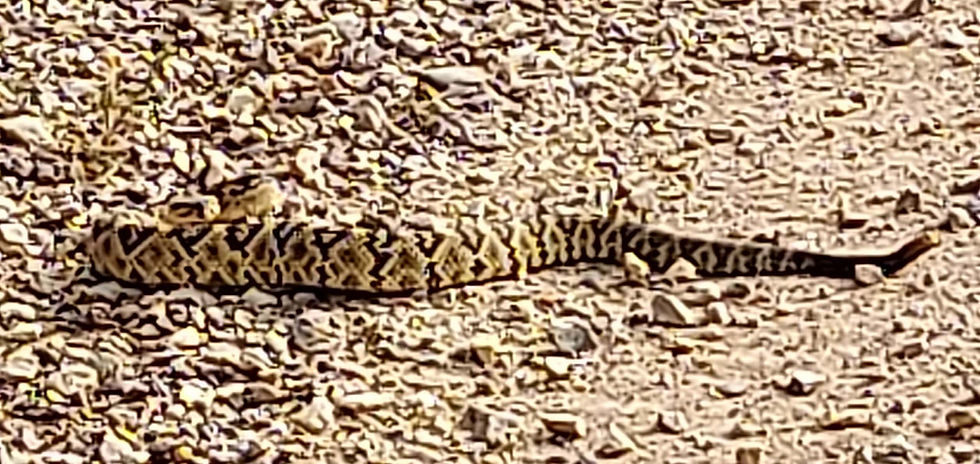
Just recently, I watched a flock of Gould’s turkeys marching down High Road. I’ve twice spotted mountain lions lounging elegantly on rooftops. And just last night, a black bear was spotted roaming right near the historic Copper Queen Hotel. Bisbee has healed, blooming into a wild, magnificent sanctuary.
Saved by the Arts
How did a dying mining town turn into a paradise where wild bears roam and culture thrives? It happened because of a beautiful, accidental collision of cultures.
In the mid-1970s, as the town emptied, an accidental wave of "hippies" discovered the cheap, abandoned housing in the Gulch. Looking up at the steep hillsides, they thought it resembled a miniature San Francisco. They couldn’t afford much, but they could afford a $5,000 fixer-upper with a rusted roof.
At first, the old-school miners didn’t care for the newcomers. I remember seeing tense confrontations where miners tried to start fistfights. To my absolute amazement as a kid, the hippies wouldn't fight back; they would just flash two peace signs and calmly walk away.
While the adults clashed, we kids loved them. Bisbee could be a lonely, isolated place back then. We only had three television channels, and we only ever thought in three directions (south wasn't an option because of the international border). The hippies were friendly, gentle, and brought a vibrant splash of color to a sterile world.
Those original free spirits, joined later by generations of passionate transplants, quite literally saved Bisbee. They didn’t do it with massive corporate money; they did it with their souls, their hands, and their art.
Nobody was driving down to Bisbee to look at an empty open pit or a closed Sears. But they did start driving here for the pottery, the paintings, the poetry, and the beautiful, eccentric community rising from the canyon walls.

Experience the Magic of Today’s Bisbee
Because we remember what it looked like when the lights were going out, the old-school locals hold a deep, loving respect for the artists and transplants who save our hometown every single day.
Today, Bisbee’s permanent population sits around 5,000 people across the suburbs. But come Friday, the canyon undergoes a spectacular transformation. That quiet base population swells to 10,000 as visitors from all over the world flock to experience our magic.
The historic houses in Brewery Gulch have all been lovingly restored with new skins. The sterile streets of my childhood have been replaced by a kaleidoscope of colorful art galleries, hidden antique treasures, and locally owned boutique shops. The restaurant scene is thriving, fun, and fiercely independent.
Bisbee didn't become a ghost town. Instead, it became the ultimate, eclectic tourist experience—a place where history, wild nature, and artistic freedom dance together under a clear, brilliant blue sky.
Whether you are looking to get lost in the winding, stair-stepped alleys, view incredible wildlife right from a café patio, or find a piece of fine art that speaks to your soul, Bisbee is waiting to welcome you. Book a tour with us, travel our historic streets, and feel the heartbeat of the town that refused to die.


Comments